
FAHES is Qatar’s authorised vehicle inspection service for checking whether vehicles meet applicable road-safety, technical and environmental requirements. The official FAHES website provides inspection services, booking information, inspection reports and current fee details.ions, inspection process, fees, results, inspection centres and re-inspection rules.
Understanding FAHES Vehicle Inspection
A FAHES inspection is a technical assessment that checks whether a vehicle meets the applicable requirements for safe and legal use on Qatar’s roads.
The examination focuses on vehicle systems and components that can influence safety and roadworthiness. Depending on the inspection category, the service may also include an under-chassis inspection or an exhaust-emission test.
The aim is more than finding visible or obvious faults. FAHES assesses whether the vehicle satisfies the relevant minimum requirements at the time of inspection.
When Might a Vehicle Need FAHES Inspection?
Whether an inspection is required depends on factors such as the vehicle category, registration status and current Traffic Department requirements.
Private vehicles and other categories covered by periodic inspection rules should check their specific inspection obligations, particularly before renewing registration.
Not sure whether your vehicle needs an inspection? Check the current requirements through the official FAHES service or Qatar’s Traffic Department before proceeding with registration renewal.
What to Do Before You Take Your Vehicle to FAHES
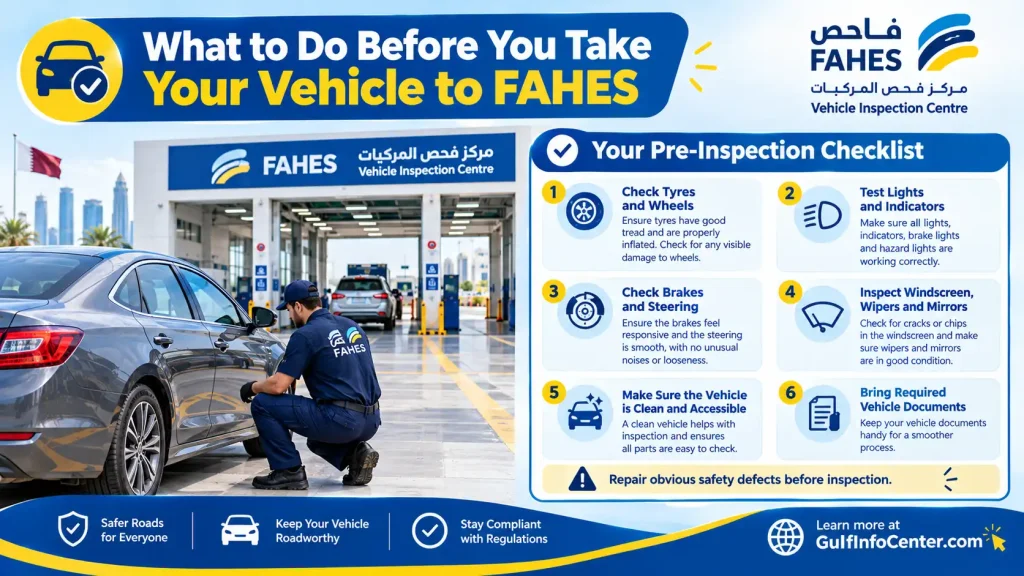
A few checks before your visit can help you identify obvious problems and deal with them before they affect the inspection result.
Documents and Information to Prepare
The documents you need can depend on the vehicle and the type of inspection. As a general preparation checklist, have the relevant vehicle and registration information ready, such as:
- Vehicle registration card (Istimara)
- Up-to-date vehicle and owner details
- Relevant Traffic Department documents
- Import or customs paperwork, where applicable
- Required approvals for vehicle modifications, where applicable
Some vehicle categories may have additional technical or legal requirements. Check the requirements that apply to your specific vehicle before heading to the inspection centre.
Give the Vehicle a Quick Check
Before leaving, take a few minutes to look over the main areas linked to safety and roadworthiness.
- Tyres: Inspect the tyres for visible damage and check their general condition and tread.
- Brakes: Any unusual braking behaviour or reduced performance should be assessed before the inspection.
- Lights: Test the headlights, indicators, brake lights and other required lighting equipment.
- Steering: Look out for looseness, unusual movement or other steering-related problems.
- Suspension: Check for visible damage, abnormal movement or unusual noises.
- Exhaust: Pay attention to obvious exhaust faults or unusual emissions.
- Body and chassis: Look for serious structural damage or other issues that could affect safety.
Before you go: If you already know about a vehicle fault, it is better to have it repaired before the FAHES inspection rather than waiting for the defect to be recorded in the report.
How to Book a FAHES Inspection
FAHES provides digital options for managing inspection-related services, including details about inspection centres and appointments. However, booking arrangements can vary depending on the service and inspection station, so an appointment may not always be available or required.

Booking an Inspection Online
When online appointment booking is available, you can generally expect the process to follow these steps:
- Open the official FAHES or WOQOD digital service.
- Select the vehicle inspection service you need.
- Enter the requested vehicle information.
- Add the required contact details.
- Choose a suitable FAHES inspection centre.
- Select an available date and time, where appointment slots are provided.
- Check that the booking details are correct.
- Pay the applicable inspection charge.
- Save your booking or payment confirmation.
- Bring the required documents when you visit the centre.
FAHES also promotes a mobile application that supports vehicle inspection services and inspection-fee payments.
Verify the Centre’s Arrangements First
Don’t assume that every FAHES station follows the same process. Services, appointment arrangements and operating information can differ between locations.
Before travelling, confirm:
- Service availability: Make sure the centre provides the inspection you need.
- Appointment requirements: Check whether advance booking is necessary.
- Operating details: Review the latest information for the station.
- Vehicle eligibility: Confirm that your vehicle category is accepted.
- Special instructions: Check for any current guidance from FAHES.
Planning tip: Give yourself enough time for registration and the inspection rather than arriving immediately before your scheduled appointment.
What to Expect at a FAHES Inspection Centre
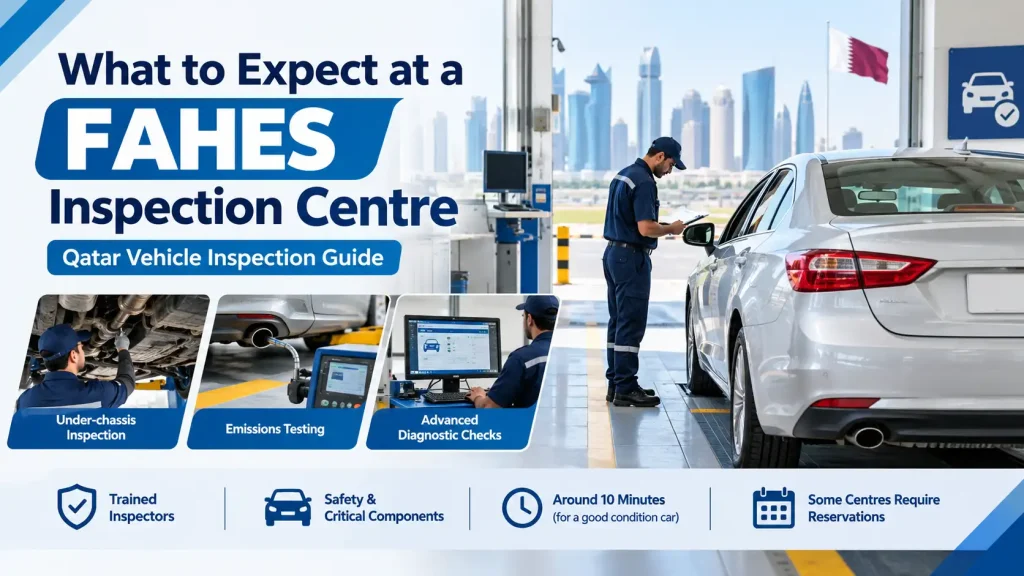
A FAHES visit generally involves several stages, starting with registration and verification before the vehicle moves on to the relevant technical checks.
1. Arrive With Your Vehicle and Documents
Take your vehicle and the required documentation to the FAHES inspection centre you selected.
If you have an appointment, keep the booking details available so they can be checked when you arrive.

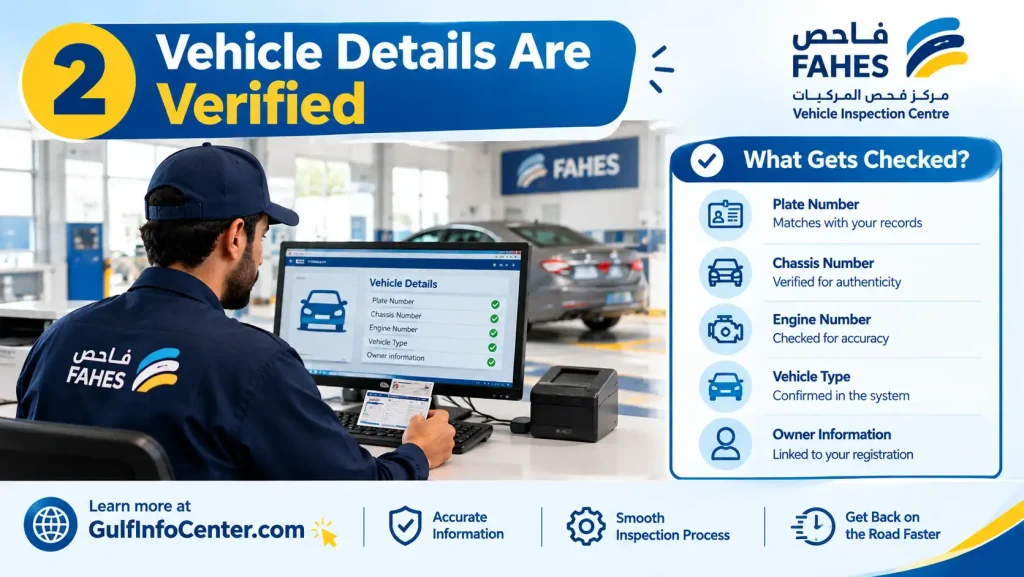
2. Vehicle Details Are Verified
During registration, the relevant vehicle information and inspection details are checked. Make sure the information linked to your vehicle is accurate before the technical inspection begins.
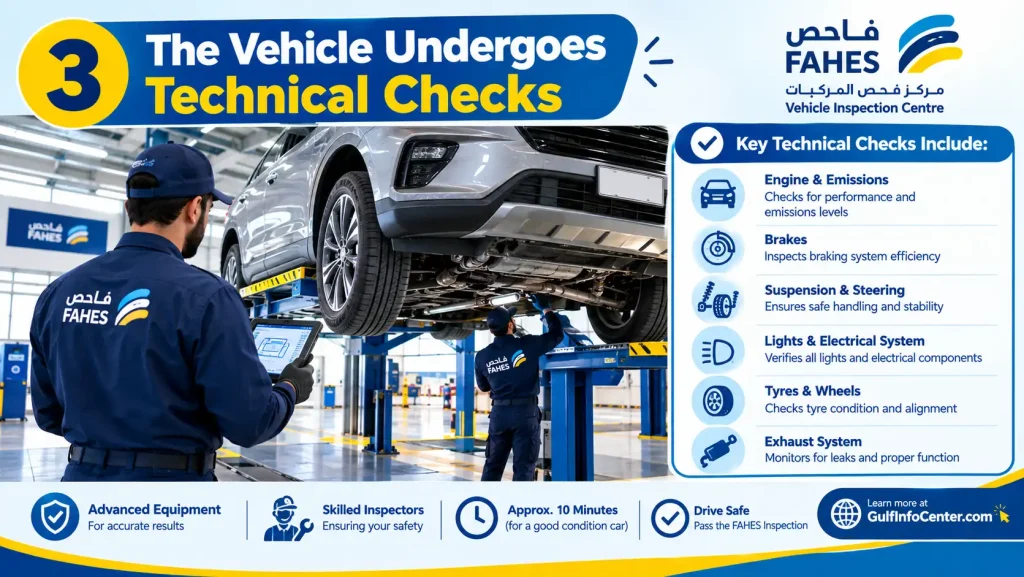
3. The Vehicle Undergoes Technical Checks
The inspection carried out depends on the vehicle category and the service requested. FAHES offers services such as technical vehicle inspection, under-chassis inspection and exhaust-emission testing.
These checks are intended to identify defects or conditions that may affect the vehicle’s safety, roadworthiness or compliance with applicable requirements.
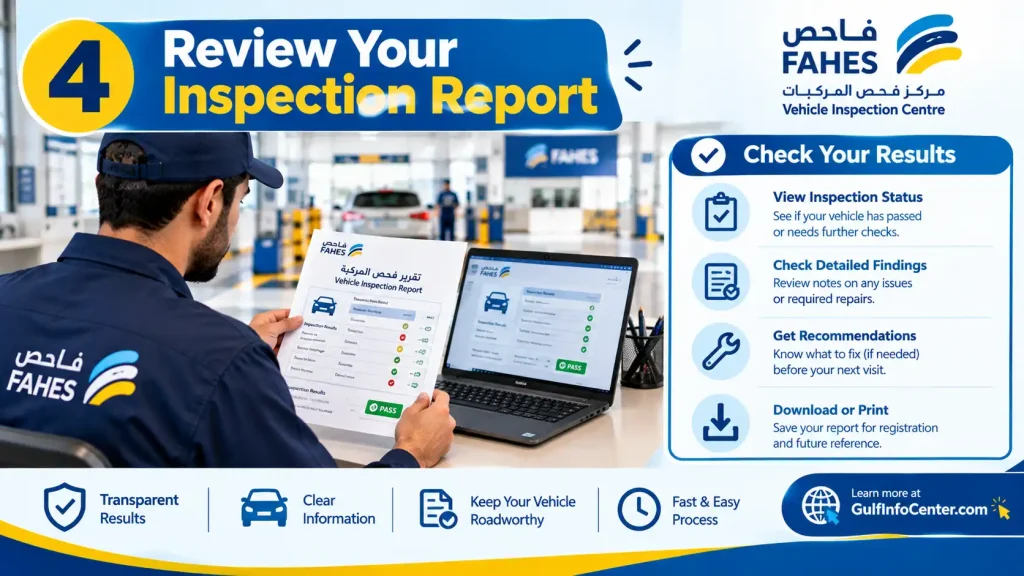
4. Review Your Inspection Report
Once the inspection has been completed, the result and available report information can be accessed through the relevant FAHES service.
The Vehicle Inspection Report may include details such as:
- Inspection number
- Inspection date
- Plate number
- Plate type
- QID
- Chassis number
- Mileage
- Legal requirements
- Technical evaluation
- Report validity
The exact checks and information recorded can depend on the vehicle and inspection service involved.
What Does FAHES Inspect on a Vehicle?
The items examined by FAHES can vary depending on the vehicle category and inspection requirements. However, several key safety and technical areas are commonly relevant when a vehicle is assessed.

Brakes and Braking Performance
The braking system is an important part of vehicle safety. If you have noticed weak braking, unusual noises or other changes in braking performance, it is sensible to have the issue checked before the inspection.
Lights, Indicators and Signals
Required lighting and signalling equipment may be inspected. Before visiting FAHES, test the headlights, brake lights, indicators and any other required lights to identify obvious faults.
Tyre Condition
Tyres play an important role in safe road use. Look for visible damage or unsuitable wear before the inspection. If a tyre has a defect, it may be recorded in the inspection report.
Steering and Suspension Components
The steering and suspension systems contribute to vehicle control and stability. Any noticeable fault in these areas should be assessed by a qualified mechanic rather than left until the inspection.
Engine and Exhaust Emissions
FAHES offers exhaust-emission inspection services as part of its vehicle inspection activities. Emissions testing helps identify vehicle pollution and supports compliance with applicable requirements.
If you notice unusual exhaust smoke or are already aware of an emissions-related fault, consider having the vehicle checked before presenting it for inspection.
Bodywork and Chassis
An under-chassis inspection can reveal defects that may create a safety or structural concern. Serious problems affecting the body or chassis should be addressed before the vehicle is presented for inspection.
Other Checks Based on Vehicle Type
The inspection may also cover other technical or legal requirements depending on the vehicle and the category of inspection being carried out.
Keep in mind: There isn’t necessarily one identical inspection checklist for every vehicle. The applicable checks depend on the vehicle type and inspection category.
How Much Does a FAHES Inspection Cost?
The cost of a FAHES inspection depends on the type of vehicle and the service you need. Since charges may be updated over time, it is best to check the latest official FAHES fee schedule before paying.
Inspection Fees by Vehicle Type
| Vehicle or Service | Fee Information |
|---|---|
| Private passenger vehicle | Check the current official fee |
| Light vehicle | Check the current official fee |
| Heavy vehicle | Check the current official fee |
| Trailer / semi-trailer | Check the current official fee |
| Motorcycle | Check the current official fee |
| Heavy equipment | Check the current official fee |
| Special inspection services | Depends on the service |
The final amount can vary if your request includes an additional inspection service. For that reason, older fee figures should not be treated as the current price.
FAHES Payment Options
FAHES promotes digital payment through its mobile service, although the available payment arrangements may depend on the service and the inspection location.
Before making a payment, check the latest FAHES information for the applicable fee and accepted payment method. This is the safest way to avoid relying on outdated charges or payment details.
What Happens When a Vehicle Fails FAHES Inspection?
A failed FAHES inspection means that the examination found one or more defects that need to be addressed. Your inspection report is the starting point for the next step because it records the problems identified during the test.
Steps to Take After a Failed Result
Don’t rely on guesswork when preparing the vehicle for another inspection. Use the report to work through the defects that were recorded.
- Review the inspection report and note every defect listed.
- Take the vehicle to a qualified mechanic to repair the affected components.
- Follow the manufacturer’s recommendations when completing the necessary repairs.
- Check that the repairs address the defects identified in the inspection report.
- Arrange the required re-inspection once the repairs have been completed.
- Return within the applicable period for the follow-up inspection.
- Keep your previous inspection details available when returning to FAHES.
FAHES advises that defective components should be repaired by qualified mechanics in line with the vehicle manufacturer’s recommendations. If a major defect creates a safety risk, avoid driving the vehicle until the issue has been properly dealt with.
Can You Get a Free Re-Inspection?
Under the supplied FAHES inspection-report terms, one free re-inspection is permitted for each paid inspection. The provision does not apply to drinking-water tankers.
The re-inspection may cover the defective components and, where required, related systems as well.
Checking Your FAHES Inspection Report
Once your vehicle has been inspected, you can check the available results through the official FAHES Vehicle Inspection Report service. You’ll need a few details from your vehicle and identity records to retrieve the report.
Details Required to Find the Report
The online service requires the following information:
- Plate number
- Plate type
- QID
- CAPTCHA verification
Enter the requested details and complete the verification step to access the available inspection information.
If Your Vehicle Passes
A passed inspection means the vehicle met the minimum requirements for the items that could be accessed and tested during that particular inspection.
However, passing the test doesn’t guarantee that the vehicle will remain defect-free throughout the year. Parts can wear out or develop faults after the inspection, so the owner or driver is still responsible for keeping the vehicle in a safe condition.
If Your Vehicle Fails
A failed inspection report shows the defects identified during the examination. These problems should be repaired before returning for the relevant re-inspection.
If you think there may be an issue with the result, FAHES advises contacting customer-service staff promptly after receiving the report and before moving the vehicle from the parking area. This allows the matter to be raised at the appropriate time.
Where Can You Get a FAHES Inspection?
FAHES has inspection facilities across several areas of Qatar, as well as mobile inspection units. The available services and operating arrangements are not necessarily the same at every location, so it is worth checking the details before you travel.
The supplied information lists permanent FAHES stations in areas such as:
- Industrial Area
- Mesaimeer West
- Wadi Al Banat
- Al Wakra and Al Wukair
- Al Shahaniya
- Al Eqda
- Al Mazrooah
What to Check Before Visiting
Choosing a nearby centre is only part of the process. Before travelling, review the latest FAHES information for the station you plan to use and make sure it can handle your particular inspection.
Pay attention to:
- Required inspection: Confirm that the centre offers the service you need.
- Vehicle eligibility: Check whether your vehicle type or category is accepted.
- Appointments: Find out whether you need to book before visiting.
- Operating arrangements: Check the centre’s current working arrangements.
- Special requirements: Look for any instructions that apply to your inspection or vehicle.
Practical tip: Services can vary between FAHES locations. Confirming the details in advance can prevent an unnecessary journey to a station that does not offer the inspection service you require.
How to Get Your Vehicle Ready for FAHES Inspection
A little preparation before your FAHES inspection can help you spot common vehicle problems early. Checking a few basic safety and maintenance items beforehand may save you from an avoidable failed inspection or an extra visit.
Check the Vehicle Lights
Test the headlights, indicators and brake lights to make sure they are working correctly. Also inspect any other required lighting equipment.
Replacing a faulty bulb or fixing a lighting issue before the inspection is usually easier than dealing with it after a failed result.
Inspect Your Tyres
Look carefully at the tyres for obvious damage, excessive wear or other visible problems. If you have any concerns about their condition, have them assessed by a qualified professional before the inspection.
Make Sure the Brakes Are Working Properly
Don’t overlook unusual noises, changes in braking behaviour or reduced braking performance. These can indicate a problem that should be checked by a qualified mechanic before you take the vehicle for inspection.
Repair Any Known Problems
If you are already aware of a fault with the vehicle, it’s worth having it repaired before the FAHES inspection. Addressing known defects in advance can reduce the chance of receiving a failed inspection report and having to return later.
Check for Exhaust or Emissions Problems
Pay attention to unusual exhaust smoke or any emissions-related issue you already know about. Getting these problems investigated beforehand can help you avoid discovering them for the first time during the inspection.
Have Your Documents Ready
Before leaving for the inspection centre, gather your vehicle registration details and any other documents that may be required for your particular vehicle category. Keeping everything together can make the visit more straightforward.
Safety Comes First
If your vehicle has a serious defect that could make it unsafe to drive, don’t take unnecessary risks. Follow FAHES safety guidance and have the problem properly addressed before driving the vehicle to the inspection centre.
FAQs
Final Thought
A successful FAHES inspection is an important part of keeping your vehicle roadworthy and prepared for registration renewal in Qatar. Taking time to check the requirements, inspect your vehicle, arrange an appointment when necessary, understand what happens at the centre, and confirm the current fees can help make the process more straightforward.
Before your visit, check the latest information provided by FAHES. Inspection requirements, charges and appointment procedures can change, so using current information can help you avoid unnecessary delays or a second trip.