
Edunation Login 2026: Sign In, Registration, Student Services & Courses Guide

Edunation provides students with convenient online access to educational resources, courses, learning activities, and other student services. Whether you are a new user creating an account or an existing student trying to sign in, understanding the login and registration process can make it easier to access your academic information. In this guide, we explain Edunation Login 2026, including how to sign in, register, recover your password, access student services, and find available courses.

READMORE

Edunation at a Glance

FeatureWhat students can use it for
Student LoginAccess an existing Edunation account
DashboardReach available account and learning features
CoursesView enrolled courses and course resources
AssignmentsReview assigned academic activities
Online ClassesAccess available online conference activities
CommunicationFind course-related communications
Microsoft Sign-InAuthenticate through an associated Microsoft account
Password RecoveryRegain access when login credentials are forgotten
Student ProfileReview information connected with the account

The features you see can vary because access is controlled by the student’s account and educational institution.

What Is Edunation?

Edunation is an online education platform used to support digital learning and academic activities. Students with an active account can sign in to access the learning resources and services made available to them.

Depending on how an institution has configured the platform, students may find lessons, course materials, assignments, activities, online classes and communication features after signing in.

In other words, the login page is only the entry point. What appears after authentication depends on the student’s account permissions and enrolled courses.

How to Access Your Edunation Account

If you already have an Edunation account, you can normally begin from the platform’s sign-in page.

Before You Start

Have the following ready:

  • Your active Edunation account
  • Registered username or other required login details
  • Your password
  • A reliable internet connection
  • An up-to-date supported browser

If your account uses Microsoft authentication, you will also need access to the Microsoft account associated with your Edunation access.

Edunation Login Steps

Use this general sign-in sequence:

  • Open the Edunation login page.
  • Enter the username or account information connected to your student profile.
  • Type your password carefully.
  • Check the details before submitting them.
  • Select the available sign-in button.
  • Allow the platform time to authenticate your account.
  • Once successful, continue to your student dashboard.

Tip: If you cannot remember your password, don’t keep trying different combinations. Move to the account recovery option instead.

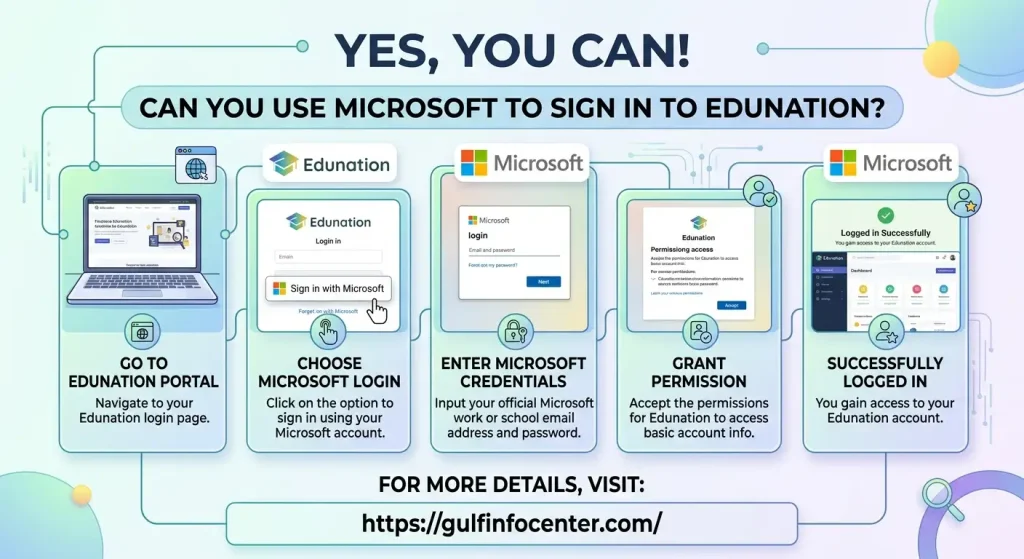
Can You Use Microsoft to Sign In to Edunation?

Microsoft authentication may be available for some Edunation accounts, depending on the way the service has been configured by the institution.

If the Microsoft option is displayed on the login screen, select it and follow the authentication instructions. When several Microsoft accounts are already signed in on the same browser, check that you are using the account linked to your Edunation access.
When the Wrong Microsoft Account Opens

A browser can sometimes retain an existing Microsoft session. If Edunation keeps selecting an account you do not want to use:

  • Sign out of unnecessary Microsoft accounts.
  • Return to the Edunation login page.
  • Select Microsoft sign-in again.
  • Choose the correct account.

You can also try a private or incognito browser window if the existing session continues to interfere.

Edunation Registration: Creating a Student Account

Not every student will necessarily create an Edunation account through a public registration form. Account creation can depend on the arrangements made by the educational institution.

If a registration option is available, follow the information requested by the platform and provide accurate details. These details may be used to connect the account with your student profile.

If there is no registration option, your school or organisation may be responsible for providing or creating your account.

What Happens After Registration?

Once registration has been submitted, Edunation may require account verification before you can sign in.

Check the email address associated with the registration or follow the instructions provided by your educational institution.

If a verification message does not appear:

  • Check your spam folder.
  • Check your junk-mail folder.
  • Confirm that the registered email address is correct.
  • Follow the institution’s instructions if it manages student accounts.

Check Your Student Profile

After your account becomes active, review the information shown in your profile.

The information available to you can vary according to account permissions. Keeping the displayed details accurate can also help identify your account if you need assistance later.

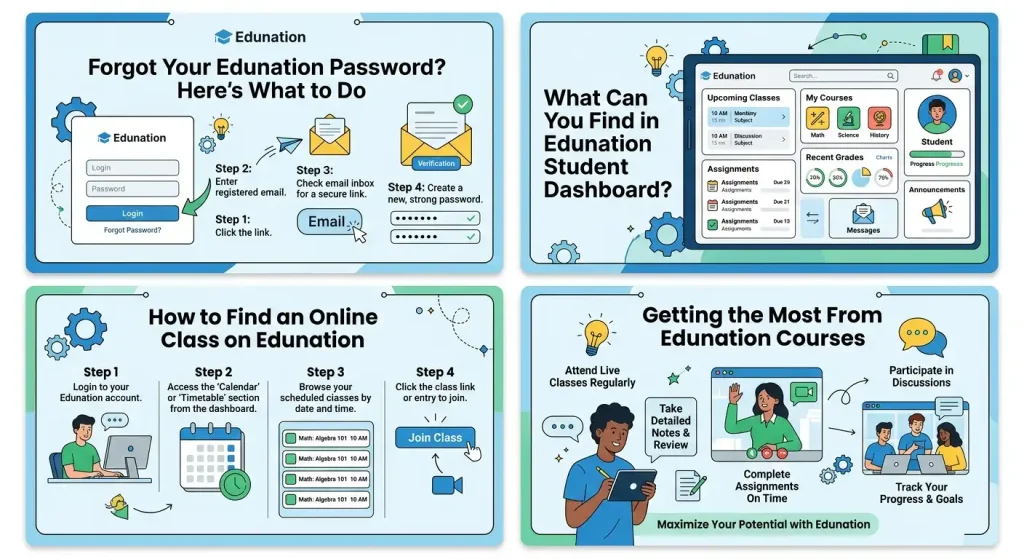
Forgot Your Edunation Password? Here’s What to Do

A forgotten password doesn’t mean you need to register again. The first option should normally be account recovery.

Password Recovery Process

If the login details are no longer remembered:

  • Open the Edunation sign-in page.
  • Find the Forgot Password or password-recovery option.
  • Provide the information requested by the recovery system.
  • Follow the instructions provided.
  • Set a new password if the recovery process offers that option.
  • Return to the login screen and try signing in again.

Avoid opening another account simply because you have forgotten the password for an existing one. Recovering the original account is generally the better approach.

When Password Recovery Doesn’t Work

Automated recovery depends on the information associated with the account. If you cannot complete the process, contact your school, organisation or the relevant Edunation support channel.

When requesting help, describe the exact problem, such as a failed recovery request or unavailable account, rather than repeatedly attempting to log in.

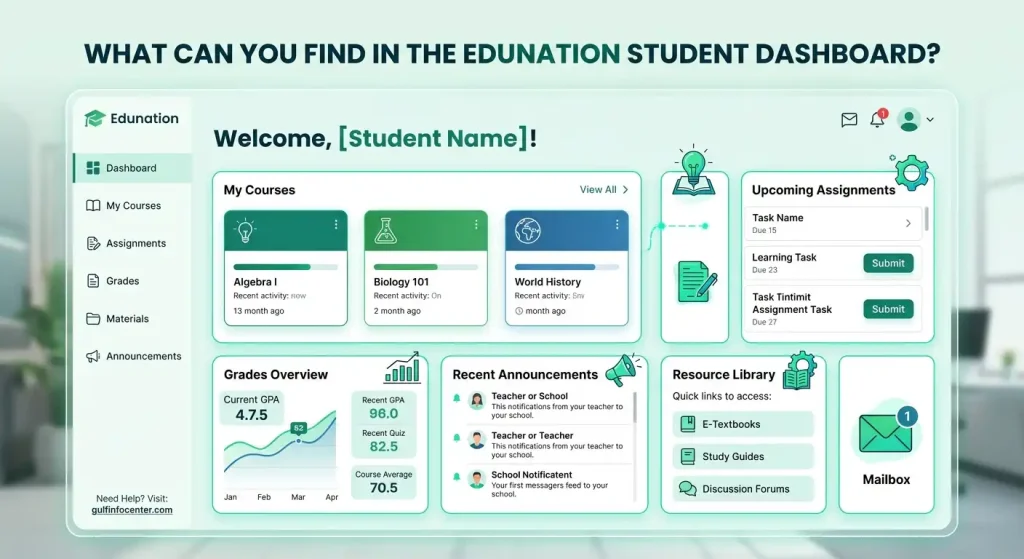
What Can You Find in the Edunation Student Dashboard?

After authentication, the student dashboard provides access to the features enabled for your account.

The layout and available options may differ between students because course enrolment and account permissions are not necessarily the same.
Student Profile

Your profile contains information connected with your Edunation account. Where editing is available, check that the information is accurate and up to date.

This can be particularly useful if you later need help identifying or recovering your account.

Your Courses

The learning area is where students can find courses assigned to their account.

A course may contain:

  • Lessons
  • Learning materials
  • Assignments
  • Activities
  • Digital learning resources
  • Other information supplied for the course

Open the relevant course to see the resources and activities available to you.

Assignments and Activities

Coursework and activities are generally located within the relevant course area. Review each assignment carefully and pay attention to any instructions or deadlines supplied by your teacher or the platform.

Checking your course regularly can help you avoid missing newly added work.

Communication Tools

Edunation also provides communication features for relevant learning information.

If you are waiting for an important course update, don’t rely only on email. Check the platform’s communication area as well.

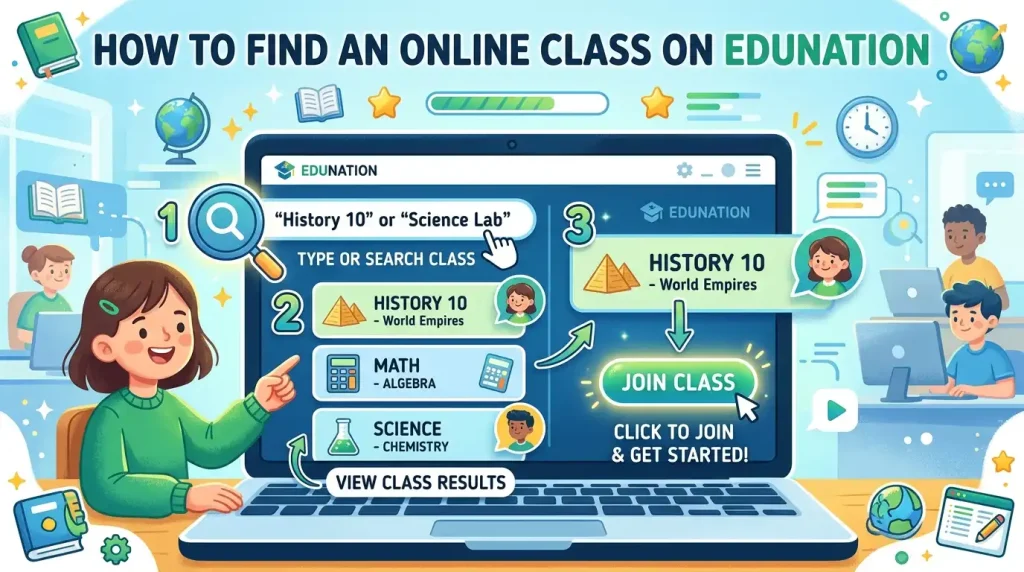
How to Find an Online Class on Edunation

Online learning activities may be available through the course area and communication features.

Edunation’s supplied support information indicates that online conferences can be accessed through:

Communication → Conferences

If you are looking for a scheduled online session, check this area as well as your course information.
Before an Online Class

A few basic checks can make the session easier:

  • Sign in before the scheduled start time.
  • Confirm that the relevant course or conference is available.
  • Use a stable internet connection.
  • Make sure you are signed into the correct account.
  • Review any instructions provided by your teacher or institution.

Getting the Most From Edunation Courses

Once your course is visible, use the learning area as your main reference point for coursework and study resources.
1. Locate the Assigned Course

Open your dashboard and go to the course or learning section. Find the course associated with your student account.

If the expected course isn’t there, first confirm that you have signed into the correct account.

2. Review Available Materials

Open the course and look through its lessons, documents, activities and other learning resources.

The content available will depend on the course.

3. Check Coursework Regularly

Assignments and activities can change as your course progresses. Reviewing the course area regularly makes it easier to notice newly available work.

4. Look for Online Conferences

When an online class is scheduled, check the course information and Communication → Conferences area for relevant conference activities.

5. Monitor Your Progress

Keep track of completed activities and outstanding assignments. Staying organised can make it easier to manage course requirements and deadlines.

Edunation Student Services and Learning Features

The services available through Edunation can differ between institutions and account types. Students should therefore use the features displayed within their own account as the most relevant reference.

Academic Resources

Your account can provide access to academic information connected with your courses and student profile.

Digital Learning

Courses, lessons, materials and activities allow students to carry out learning tasks online.

Online Communication

Communication features can provide course-related information and access to online conference activities.

Reports and Activities

Some accounts may provide reports or progress-related information. The availability of these features depends on the account configuration.

Edunation Login Troubleshooting

A failed login isn’t always caused by the account itself. Browser settings, incorrect credentials, cached data and Microsoft authentication sessions can also interfere with access.

Username or Password Rejected

Start by checking the credentials carefully.

Look for:

  • Typing errors
  • Incorrect username
  • Caps Lock being enabled
  • An outdated password
  • Use of the wrong account

If the details are still rejected, use the password recovery process rather than repeatedly guessing the password.

Login Page Won’t Load

If the Edunation login screen isn’t loading properly, try these basic checks:

  • Confirm that your internet connection is working.
  • Refresh the page.
  • Try a different browser.
  • Clear temporary browser data.
  • Temporarily disable extensions that may interfere with the page.
  • Try again later if the service appears to be unavailable.

Microsoft Authentication Is Failing

Microsoft sign-in can be affected by an existing account session in your browser.

Try signing out of other Microsoft accounts and then start the authentication process again. A private or incognito window can also help isolate browser-session problems.

Pages Behave Incorrectly

If parts of Edunation fail to display correctly, an old browser cache may be contributing to the problem.

Opening the platform in a private browsing window is a useful test. If it works there, clearing cached browser data may resolve the issue in your normal browser.

Using Edunation on a Mobile Device

Students who prefer accessing learning resources from a phone or tablet can check whether an Edunation mobile application is available for their account and device.

Mobile availability and functionality may depend on the service configuration used by your institution.

Installing the Edunation App

If an official Edunation application is available:

  • Open the official app store on your device.
  • Search for the Edunation application.
  • Check that the application is associated with the legitimate service.
  • Install the official application.
  • Sign in using your supported account method.

Avoid downloading APK files or unofficial applications from unfamiliar websites.

Mobile Account Access

Open the official application and enter your Edunation credentials if mobile login is supported.

If Microsoft authentication is available, use the Microsoft sign-in option and choose the Microsoft account connected to your Edunation access.

Common Edunation Login Mistakes to Avoid

A few simple habits can prevent unnecessary account problems.

Don’t create duplicate accounts. If you have forgotten your password, try account recovery first.

Don’t share your password. Keep your login information private, including from classmates.

Don’t ignore the dashboard. Course updates and activities may appear there.

Don’t wait until the deadline. Check assignments regularly so you have time to complete them.

Don’t forget the communication area. Online conference activities may be listed under Communication → Conferences.

Don’t use the wrong Microsoft account. If you have multiple Microsoft accounts, confirm that the correct one is being used.

Don’t rely on unofficial apps. Use an official app-store listing when a mobile application is available.

FAQs

Edunation provides some free options, but the platform is not entirely free for organisations using its complete school management and learning management features. The Edunation mobile app can be downloaded for free, while schools and educational organisations may need a paid plan for the full platform, depending on their requirements, licences and integrations.

Edunation Cost Overview

Edunation optionCost
Mobile appFree to download
Basic access or selected API levelsSome free options may be available
Full LMS and school platformCustom pricing

The Edunation App is available as a free download for students and other users who access the service through mobile devices. This does not necessarily mean that every Edunation feature or service is free.

For schools, educators and organisations that want to implement the complete Edunation LMS, pricing is generally customised. The final cost can depend on factors such as the number of user licences, required setup and integrations.

What Should You Know Before Choosing Edunation?

If you only need the mobile application, you may be able to use Edunation without paying a download fee. However, organisations looking for a complete learning and school management solution should check the available pricing and licensing options for their specific needs.

In short: Edunation has free access options, but its full LMS and school management platform should not be assumed to be completely free. Pricing can vary according to the organisation’s requirements.

The name Edunation can refer to two different education-related services. One is a school-focused digital platform, while the other is an international study and student pathway service.

Edunation as a School Platform

EdunationOS, available through edu-nation.net, is designed as an all-in-one digital environment for schools. It brings together functions such as a student information system (SIS), learning management system (LMS), administration, finance and communication tools within one connected platform.

The system includes 18 integrated applications that operate using a shared data model and security framework. This allows different members of a school community—including teachers, students, parents and administrators—to handle academic and operational tasks through a central environment.

EdunationOS is intended for physical, virtual and hybrid learning. It also supports schools working with multiple curricula and bilingual requirements, making it suitable for a range of international and regional educational settings.

Edunation as a Study-Abroad Service

There is also Edunation.co, which operates as an international student recruitment and pathway service. It helps students explore opportunities, apply to programmes and move towards degree or vocational studies in Finland and other parts of Europe.

This service is separate from the school management platform and focuses on helping international students navigate education pathways rather than managing day-to-day school operations.

Edunation at a Glance

ServiceMain purpose
EdunationOSSchool management and digital learning
Edunation.coInternational study and student pathways

Key point: If you’re looking for Edunation login, courses, assignments or a

Yes. Edunation offers a Pathway to Finland programme that provides international students with a structured route towards higher education in Finland. Students can complete the pathway successfully and then progress to participating Finnish universities.

How the Edunation Finland Pathway Works

The programme is designed to make the transition into Finnish higher education more straightforward. Key points include:

  • No entrance exam: Students who successfully complete the pathway curriculum can receive guaranteed admission to participating partner universities.
  • Online or hybrid study: You can complete the programme online from your home country or choose a hybrid Study Hub option in Finland, including opportunities connected with institutions such as Metropolia University of Applied Sciences.
  • Several study areas: Available fields include Business, Engineering and Technology, Nursing, and Social Services.
  • Finnish university partners: Progression opportunities include Universities of Applied Sciences such as Arcada, Centria, LAB, Metropolia and SEAMK.
  • Tuition costs: International student tuition generally falls between €7,000 and €13,000 per year, with scholarship opportunities available.

What Do You Need to Apply?

The basic requirements listed for the pathway include:

RequirementDetails
PassportA valid passport
EducationHigh school or secondary education certificate
Academic resultMinimum 50% GPA
EnglishProof of English proficiency

Is Edunation a Direct University Admission Route?

Edunation’s pathway is intended to provide a structured route into Finnish higher education rather than simply acting as a standard university application. The key condition is successful completion of the required pathway curriculum before progressing to the relevant partner institution.

Before applying: Check the current programme requirements, available fields, partner institutions, tuition fees and scholarship conditions, as these details can vary between programmes.

Yes, Dubai can be a strong destination for higher education, particularly for students who want access to international universities, modern infrastructure and a business-focused environment. The city is home to several international branch campuses, giving students the opportunity to study for degrees linked to universities from countries such as the UK, US and Australia without relocating to those countries.

Why Do Students Choose Dubai for Higher Education?

Dubai offers several advantages for international students:

  • International universities: Students can access branch campuses of recognised universities from the UK, US and Australia while remaining in the UAE.
  • Safety and infrastructure: Dubai is known for its modern infrastructure, public transport and clean urban environment, along with generally low crime levels.
  • Career opportunities: As a major international business centre, Dubai provides opportunities for networking, internships and exposure to industries such as finance, technology and logistics.
  • Student visa options: Student visa procedures can be relatively straightforward, and there are post-study visa pathways that may provide additional options after graduation.

What Are the Possible Disadvantages?

Dubai isn’t the right choice for every student. There are several factors worth considering before applying:

ConsiderationWhat to expect
Living costsAccommodation, food and everyday expenses can be high
Academic standardsQuality can vary between institutions and individual branch campuses
Long-term settlementPermanent residency options can be more limited than in some traditional study destinations

Is Dubai Better Than Studying Abroad?

That depends on your priorities. Some international branch campuses in Dubai have strong reputations, but students may prefer studying at a university’s main campus in countries such as the UK, US or Australia for the wider academic and cultural experience.

Student opinions can also differ. Some value Dubai’s safety, multicultural environment and access to business opportunities, while others feel the city is particularly well suited to professional and corporate careers rather than being a traditional university destination.

Key takeaway: Dubai offers a modern and internationally focused higher-education environment, but students should compare the specific university, programme, tuition fees, living expenses and career prospects rather than judging the entire education system by the city alone.

Yes, some students can study in Finland without taking IELTS. Finnish universities and universities of applied sciences may accept other forms of English-language proof, but the exact requirements depend on the institution and programme.

How Can You Prove English Without IELTS?

There are several possible alternatives to an IELTS certificate:

  • Medium of Instruction (MOI): If your previous high school, bachelor’s or master’s programme was taught entirely in English, some universities may accept an official MOI certificate from your previous institution.
  • Other English tests: Depending on the university, alternatives such as TOEFL iBT, PTE Academic or Cambridge English examinations may be accepted.
  • Interview or entrance assessment: Certain programmes may allow applicants to demonstrate their English ability through an online interview, video assessment or specific university entrance examination.

Does Every Finnish University Accept MOI?

No. English-language requirements vary between universities and individual programmes. An MOI certificate may be accepted for one programme but not necessarily for another.

For that reason, check the specific admission requirements before applying. The national Studyinfo portal can also be used to review programme and application information.

Important: Not needing IELTS does not necessarily mean that you can apply without proving English proficiency. Always confirm which form of language evidence your chosen Finnish institution requires before submitting an application.

Yes, you may be able to apply for permanent residence in Finland after studying, provided you meet the requirements set by the Finnish Immigration Service (Migri). The usual route involves completing your studies, moving into an appropriate residence permit for work or another qualifying purpose, and meeting the required residence and language conditions.

What Happens After Graduation?

A student residence permit does not automatically give you permanent residence. After completing your studies, you may need to change to another type of residence permit.

If you need more time to find employment or start a business, you can apply for an extended residence permit for seeking work or starting a business before your student permit expires. Once you secure suitable employment, you may move to a work-based residence permit, such as a permit for an employed person or a specialist permit.

What Are the PR Requirements?

The requirements depend on the residence pathway you qualify for. The higher-education route can take into account factors such as:

  • Residence in Finland: You need to meet the required period of continuous residence under the applicable residence permit conditions.
  • Finnish higher education degree: Completing a qualifying higher education degree in Finland can be important for the higher-education pathway.
  • Language skills: Finnish or Swedish language ability may be required. The applicable rules can include an A2-level language requirement or recognised higher-education language studies, depending on the pathway.
  • Other conditions: You may also need to satisfy requirements relating to your residence status, employment or financial situation and other conditions set by Migri.

How Do You Apply for Permanent Residence?

When you meet the applicable requirements, you can submit your application through Enter Finland.

The general process includes:

  1. Complete your qualifying studies and maintain a valid residence permit.
  2. Move to an appropriate residence permit after graduation if required.
  3. Build the required period of qualifying residence in Finland.
  4. Meet the applicable Finnish or Swedish language requirement.
  5. Prepare your supporting documents, including evidence of your degree and other required information.
  6. Submit the permanent residence application through Enter Finland.
  7. Follow Migri’s instructions for identity verification and any other required steps.

Does Studying in Finland Guarantee PR?

No. Studying in Finland can create a pathway towards permanent residence, but graduation alone does not guarantee PR. Your eligibility depends on the specific residence pathway and whether you meet all the requirements when you apply.

Important: Finnish immigration rules and residence requirements can change. Before making study or immigration plans, check the latest requirements directly with Migri and confirm which pathway applies to your situation.

Choosing between the UK and UAE depends on what matters most to you, especially your income, living costs, lifestyle and long-term plans. The UAE can be attractive for people who want to maximise their take-home income, while the UK offers established public services and a broader social safety net.

Finances and Taxes

One of the biggest differences is taxation. The UAE has no personal income tax, which can allow employees to keep more of their salary. It can also be attractive to property investors because rental yields may be relatively high.

The UK has a progressive income tax system, with higher earners paying higher rates, along with National Insurance contributions. However, taxes help fund public services such as the National Health Service and state education.

Cost of Living

The UAE can be more affordable than London for some everyday expenses, but costs vary considerably depending on the emirate and lifestyle. Expats also need to consider expenses such as private education and health insurance, which can add significantly to household costs.

In the UK, living expenses can also be high, particularly in major cities. However, eligible residents can access NHS healthcare, while children can attend state-funded schools.

Safety and Lifestyle

The UAE is known for its high level of public safety, modern infrastructure and warm weather. This can appeal to people who prefer a sunny climate and a modern city lifestyle.

The UK offers a different experience, with its historic cities, cultural diversity and established public institutions. The climate is generally cooler and wetter, particularly compared with the UAE.

UK vs UAE: Which Should You Choose?

FactorUAEUK
Income taxNo personal income taxProgressive income tax
HealthcarePrivate insurance commonly important for expatsNHS provides publicly funded healthcare
EducationPrivate schooling can be expensiveState-funded schooling available
WeatherWarm and sunny for much of the yearCooler and generally wetter
SafetyGenerally very highVaries by location
LifestyleModern, business-focused and internationalHistoric, multicultural and socially diverse

Final Verdict

There is no single winner between the UK and UAE. The UAE may be a better fit if your priorities are tax-free personal income, warm weather, safety and business opportunities. The UK may suit you better if you value public healthcare, state education, established social services and a longer-established social environment.

Before deciding, compare your expected salary, housing costs, healthcare, education expenses and long-term residency goals rather than looking at tax rates alone.

Final Thought

Edunation provides students with a central place to access their courses, learning materials, assignments, online classes and communication features. By using the correct login details, keeping your account secure and checking the dashboard regularly, you can stay on top of your online learning activities. If you experience login or account issues, start with the available recovery and troubleshooting options, and contact your school or support team when further assistance is required.


GulfInfoCenter Editorial Team

The GulfInfoCenter Editorial Team publishes accurate, up-to-date guides on government, education, finance, immigration, employment, and public services across the United Arab Emirates, Kuwait, and Qatar. Our content is carefully researched and references official sources whenever possible, helping residents, citizens, students, and visitors access essential services with confidence.

Articles: 30

Leave a Reply

Your email address will not be published. Required fields are marked *